
Joints are the connections between bones that allow the body to move. Every step, every overhead reach, and every bend at the waist involves dozens of joints working together with surrounding muscles, tendons, and ligaments. When joints become painful or stiff, simple tasks become difficult, and quality of life declines quickly.
Joint pain and stiffness are among the most common reasons people seek care from a healthcare provider, and they can affect any joint in the body. The knees, hips, shoulders, elbows, and ankles are particularly common sites of complaint. The causes are wide-ranging and include acute injuries, repetitive strain, inflammatory conditions, age-related degeneration, and poor movement mechanics that place uneven loads on joint surfaces over time.
Joint symptoms can also be secondary to dysfunction elsewhere in the body. A stiff hip may increase stress on the lower back, for example, and a restricted ankle may change how the knee absorbs impact during walking. Understanding the source of joint pain and the factors that contribute to it is essential to finding care that works beyond simply managing symptoms. A thorough evaluation is the starting point for identifying what is actually happening in and around the affected joint.
Joint pain and stiffness can arise from a number of different structural and inflammatory processes. Identifying the underlying cause shapes every aspect of how the condition is best managed.
Osteoarthritis
Osteoarthritis is the most common form of arthritis and results from the gradual breakdown of cartilage, the protective tissue that cushions joint surfaces. As cartilage wears away, bone can begin to rub against bone, causing pain, stiffness, swelling, and reduced range of motion. It most commonly affects the knees, hips, hands, and spine and is closely associated with age, prior joint injury, and excess mechanical load over time.
Tendinitis and Bursitis
Tendinitis is inflammation of a tendon, usually from repetitive use or overload. Bursitis is inflammation of a bursa, the small fluid-filled sac that cushions areas where tendons pass over bony prominences. Both produce pain and tenderness around a joint and can significantly limit movement. Common locations include the shoulder, elbow, hip, and knee.
Sprains and Ligament Injuries
Ligament sprains occur when a joint is forced beyond its normal range of motion, stretching or tearing the structures that hold the joint together. These injuries are common in the ankle, knee, and wrist and can lead to ongoing joint instability and recurring pain if not properly addressed.
Inflammatory Arthritis
Conditions such as rheumatoid arthritis, psoriatic arthritis, and gout cause joint inflammation through immune or metabolic processes rather than mechanical wear. These conditions often involve multiple joints and may present with warmth, swelling, redness, and systemic symptoms such as fatigue. They typically require medical management alongside musculoskeletal care.
Signs and Symptoms
Common symptoms of joint pain and stiffness include:
Diagnostic Process
Diagnosis begins with a health history and physical exam. Your provider will assess the affected joint's range of motion, strength, stability, and tenderness. Orthopedic tests specific to each joint help identify the involved structures. X-rays are commonly used to assess alignment, joint space, and signs of degeneration. MRI or ultrasound may be used to evaluate soft tissue structures such as cartilage, tendons, and ligaments.
Age
The risk of joint pain, particularly from osteoarthritis, increases significantly with age as cartilage naturally wears down and the body's repair capacity slows.
Prior Injury
Previous joint injuries, even those that appeared to fully heal, can change how a joint loads and moves, increasing the long-term risk of degeneration and chronic pain.
Body Weight and Mechanical Load
Excess body weight places increased stress on weight-bearing joints, particularly the knees and hips. Even a modest reduction in body weight can meaningfully reduce joint load and associated symptoms.
Repetitive Use and Overtraining
Athletes and workers who perform the same movements repeatedly are at higher risk for tendinitis, bursitis, and early joint degeneration in the most-used joints.
Poor Movement Mechanics
Moving in ways that place uneven or excessive stress on joint surfaces accelerates wear over time. This is often a correctable factor with proper assessment and movement guidance.
The knee is one of the most frequently injured joints in the body. It bears significant load during almost every daily activity, and it is particularly vulnerable during sports and recreational activities that involve cutting, pivoting, or repetitive impact. Below are some of the most common knee-related conditions we see at Vital Roots Chiropractic.
Patellar Tendinitis
Patellar tendinitis, sometimes called jumper's knee, involves irritation and degeneration of the patellar tendon that connects the kneecap to the shinbone. It typically develops from repetitive jumping, squatting, or running and produces pain directly below the kneecap that worsens with activity. Chronic cases that have not responded to rest or physical therapy often respond well to shockwave therapy, which stimulates tissue repair at the cellular level without surgery or extended downtime.
Meniscus Injuries
The menisci are two wedge-shaped pieces of cartilage that cushion and stabilize the knee joint. Tears can occur suddenly from a twisting movement or develop gradually through age-related degeneration. A meniscus tear typically causes pain along the inner or outer knee line, swelling, stiffness, and sometimes a catching or locking sensation with movement. Chiropractic evaluation can identify whether conservative care is appropriate or whether specialist referral is needed.
Pickleball and Golf-Related Knee Pain
Racket and paddle sports like pickleball place repeated lateral and rotational stress on the knee, making players particularly susceptible to patellofemoral pain, meniscus irritation, and IT band syndrome. Golf involves a similar pattern of rotational load through the lower extremities during the swing, which can aggravate existing knee dysfunction or contribute to new injuries over time. Many of these activity-related presentations involve a combination of joint restriction, soft tissue tightness, and movement mechanics that respond well to chiropractic care and targeted rehabilitation guidance.
Patellofemoral Pain Syndrome
Patellofemoral pain syndrome occurs when the kneecap does not track properly over the femur during movement, producing aching pain around or behind the kneecap. It is common in runners, cyclists, and people who spend long periods climbing stairs or sitting with the knee bent. Contributing factors often include hip weakness, poor lower extremity alignment, and foot mechanics, making a whole-body assessment particularly important for this condition.
Iliotibial Band Syndrome
IT band syndrome is a common overuse injury among runners, cyclists, and hikers that causes sharp or burning pain along the outer knee. The iliotibial band, a thick strip of connective tissue running from the hip to the shin, becomes irritated where it crosses the knee during repetitive flexion and extension. Treatment focuses on reducing local inflammation and addressing the hip mechanics and movement patterns that create excessive tension in the band.
A thorough evaluation includes health history, physical exam, and orthopedic testing to assess mobility, stability, and tissue integrity. X-rays reveal bone changes and joint space narrowing. MRI provides detail on soft tissues including cartilage, meniscus, and tendons. Blood work may be ordered if an inflammatory condition such as rheumatoid arthritis or gout is suspected.
You should seek evaluation if joint pain is persistent, recurring, limiting your activity, or progressively worsening over time.
Seek urgent care if you experience:
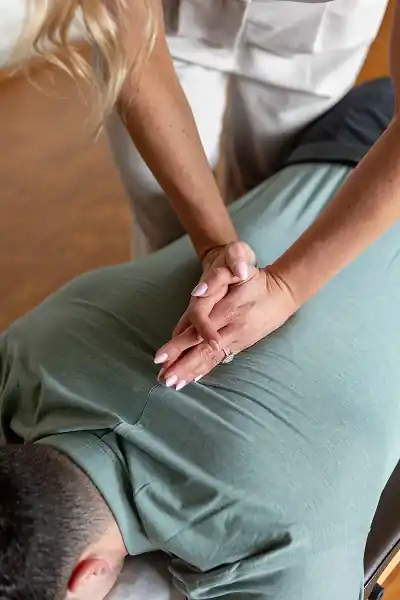
Chiropractic care takes a whole-body approach to joint pain by assessing not only the affected joint but also the surrounding structures, movement patterns, and spinal alignment that may be contributing to the problem. Restoring proper mechanics across the musculoskeletal system reduces stress on individual joints and supports more effective long-term recovery.
At Vital Roots Chiropractic, evaluation of joint pain includes a thorough history, physical exam, orthopedic testing, and X-rays when appropriate. Care may include chiropractic adjustments, soft tissue treatment, shockwave therapy for tendon and soft tissue conditions, therapeutic exercises, and movement guidance. For chronic conditions such as osteoarthritis, the goal of care is to maintain function, reduce pain, and support the patient in staying active. When a joint problem requires specialist evaluation, surgical consultation, or additional imaging, appropriate referrals will be made.

Osteoarthritis is one of the most common sources of joint pain, particularly in older adults. It results from gradual cartilage breakdown and most often affects the knees, hips, and hands. In younger and more active people, joint pain is more often related to tendinitis, bursitis, ligament injuries, or overuse. A proper evaluation is the most reliable way to identify what is actually causing the pain in a specific joint.
Chiropractic care may help reduce joint pain by addressing movement restrictions, correcting postural imbalances that increase stress on specific joints, and treating surrounding soft tissue dysfunction. It is particularly useful for joint pain that is mechanical in nature. At Vital Roots Chiropractic, we also offer shockwave therapy, which is effective for chronic tendon and soft tissue conditions that are often contributing factors in joint pain.
Brief morning stiffness lasting 10 to 15 minutes is common and is often related to reduced joint fluid circulation during rest. Stiffness lasting longer than 30 minutes, especially across multiple joints, may suggest an inflammatory condition such as rheumatoid arthritis and warrants evaluation. Persistent morning stiffness that is accompanied by swelling, warmth, or fatigue should be assessed by a provider.
Arthritis is a specific diagnosis describing inflammation or degeneration in one or more joints. Joint pain is a symptom that can result from many different conditions, including arthritis, tendinitis, bursitis, ligament injury, and mechanical dysfunction. Not all joint pain is arthritis, and arthritis itself encompasses many conditions with different causes and treatment approaches. A proper evaluation is the only reliable way to identify which condition is actually present.